Tampilkan postingan dengan label World Architecture Festival. Tampilkan semua postingan

Rabu, 03 Juli 2013

Updated: World Architecture Festival - the NZ finalists

Seven New Zealand projects have been listed as finalists in the World Architecture Festival, to be held in Singapore in October. 

The Auckland Art Gallery, designed by FJMT and Archimedia, is a finalist in the festival's 'Culture' category (photo below by Patrick Reynolds). 


The Whakatane Library and Exhibition Centre (below) by Irving Smith Jack Architects (a recent winner in the NZIA national awards), is a finalist in the 'New and Old' category.


A housing development at 387 Tamaki Drive, Auckland, by Sydney-based Ian Moore Architects is a finalist in the 'Housing' category (below).

Ian Moore Architects – 387 Tamaki Drive

The Mackelvie Street development in Ponsonby, Auckland, by RTA Studio in is a finalist in the 'Shopping' category (below, photo by Jackie Meiring).


Also by RTA Studio, the planned 'Ice Hotel' in Queenstown is a finalist in the 'Future Projects - Leisure Led Development' category.  


An Alexandra house, also by Irving Smith Jack Architects, is a finalist in the 'Villa' category (photo below by Patrick Reynolds; look out for this in an upcoming issue of HOME).


The Auckland Zoo giraffe house (rendering below), by Glamuzina Paterson and Hamish Monk Architects, is a finalist in the 'Display' category. 


Congratulations to all the finalists! We'll keep you up to date with details later in the year when the winners are announced at the festival.

Selasa, 04 Desember 2012

Outtakes: Hut on Sleds by Ken Crosson

In our April/May issue, we introduced you to a tiny house, "Hut on Sleds" on the Coromandel Peninsula at Whangapoua Beach designed by Ken Crosson(below). This diminutive, charming holiday home was a finalist in our Home of the Year award 2012, and subsequently shortlisted in the World Architecture Festival's awards. It is such a cleverly built and elegant bach that we wanted to show you more of Jackie Meiring's terrific photographs of it. 

"It had to be a de-mountable house," explains Ken, required by the council because it is located within an erosion zone on the Coromandel coast. Measuring a mere 40 square metres, the house rests on two thick wooden 'sleds' that allows it to be dragged anywhere once uncoupled from power and wastewater and untied from the concrete pads beneath the sleds. It lends an entirely different meaning to the idea of moving house.


The bach has been designed to close up against elements: with doors and shutters closed (as in the photo above) it is truly hermetic to rain and wind gusts. But when the sun is shining, the house opens up to let the outside in (below).

Beyond the demands of its setting, the bach had to fit its clients' desires as well. "It was all about examining what was the real essence of a bach versus a beach house," says Ken. "They wanted something small and experiental. It's tiny, so the challenge was to make it as bachy as possible, and not waste any space in doing that."

That's why there's an intentionally enforced proximity imposed on its occupants : a compact front living and kitchen area flows through a rear bunkroom for the owners' three young children, and the main bedroom is up a ladder from the living room, sharing the same view as downstairs through the huge glass doors.


In the main bedroom (above), there are warm shades of macrocarpa joinery and a remarkable attention to storage detail. Downstairs, each of the childrens' beds (below) has their own storage spaces ("secret cubby holes" says Ken), their own lights and windows. The walls themselves double as floor-to-ceiling shelf space that Ken hopes will accumulate the personal histories of the occupants.


The ladder you use to reach the main bedroom also brings you to the roof terrace, which catches rainwater for the gravity tanks behind (below), and affords great views of the beach and the sunsets.


Inside, there are intentional references made by Ken and his clients to the campground, such as the deliberately rudimentary tap and shower fittings. As Ken says: "You know, where you fill your bucket. It's that kind of idea"


To one side, a second entrance to the house via the shower and bathroom, allows occupants to shower straight away after going to the beach (below).


"It's kind of like a tent," says Ken about the bach's structure. "It's dramatic and vertical. The tent flap [the huge macrocarpa front shutter] is that big door that opens up - a big gesture that embraces the view."


Kamis, 19 Juli 2012

World Architecture Festival - the NZ finalists


New Zealand architects have made a fantastically strong showing in the shortlist of nominees for awards at the World Architecture Festival.

First, with an impressive three nominations (and one shared one) are these projects from Fearon Hay Architects: The Brancott Estate Heritage Centre in Marlborough (below), shortlisted in the  'Display' category of the festival and featured in our December/January 2012 issue. The photo below is by Patrick Reynolds.
 

Fearon Hay's Imperial Lane project in Auckland (below), featured in our February/March issue, picked up a nomination in the festival's 'Old and New' category. Photo by Patrick Reynolds.


Jeff Fearon and Tim Hay are going to have a very busy time of it when they present shortlisted projects to the judges at the festival in Singapore in October: their Island Retreat (below), featured in our current issue, has been shortlisted in the 'Villa' category of the awards. 

And the firm was also nominated in the urban design category, along with Taylor Cullity Lethlean of Melbourne, for their excellent work at Auckland's North Wharf (below). Both photos by Patrick Reynolds.
   

In non-Fearon Hay nominations, Ken Crosson of Crosson Clarke Carnachan's Hut on Sleds at Whangapoua Beach (below), a finalist in our Home of the Year award 2012, is shortlisted in the festival's 'Villa' category. Photo by Jackie Meiring. 


Patterson Associates' Geyser building (below) on Auckland's Parnell Road is nominated in the festival's 'Office' category. 


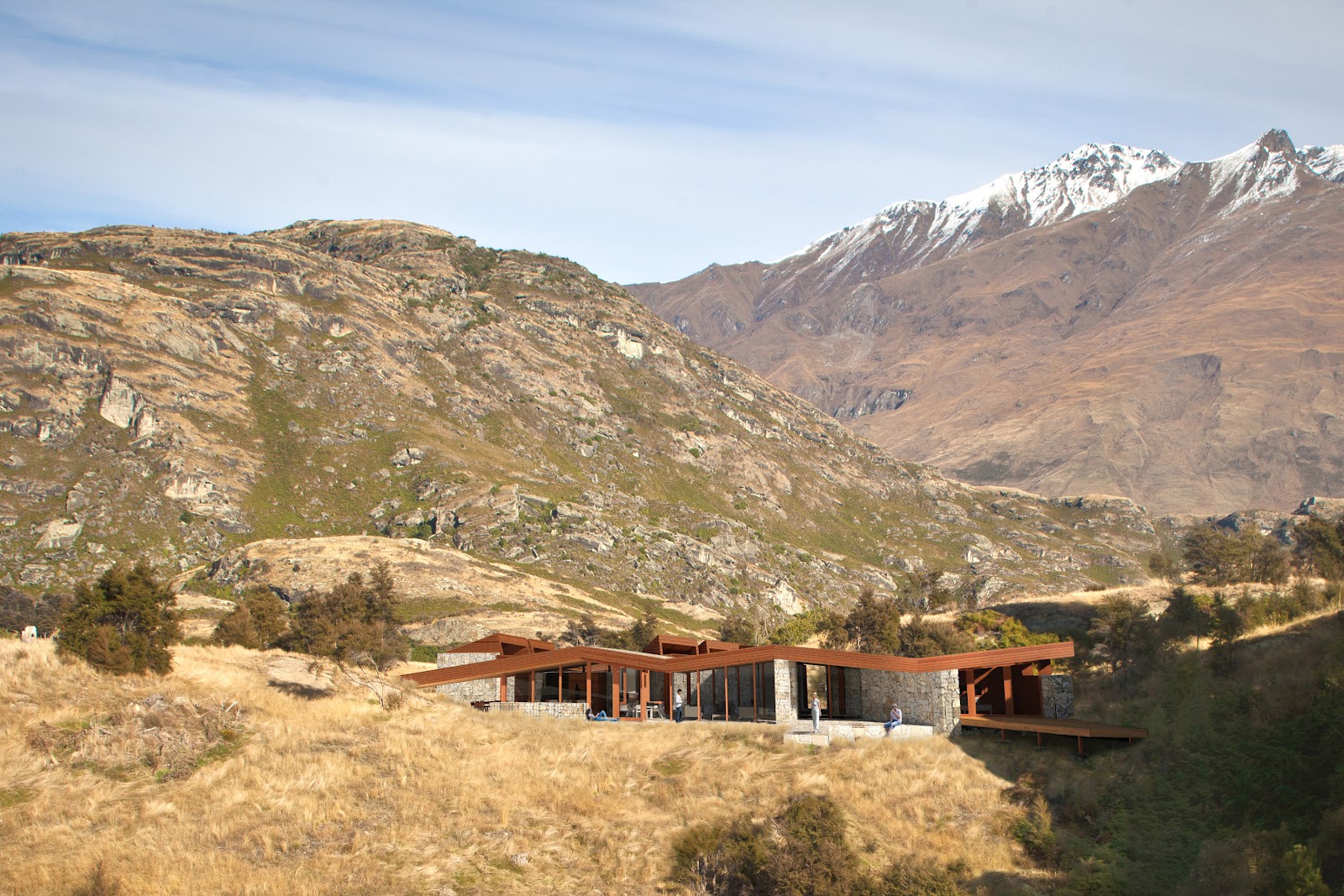
As we mentioned earlier in the week, RTA Studio's C3 house (below, which is planned, but not yet built) has picked up a nomination in the 'Future Projects' section.


Also in 'Future Projects' a planned Waikato Whanau Ora centre (below) by Hamish Monk, Aaron Paterson and Dominic Glamuzina of The Flood.


All the finalists will travel to the World Architecture Festival in Singapore in October to give presentations about their work to a panel of judges. We wish them luck, and congratulate them on their success in getting this far. 

The full World Architecture Festival shortlist is here.

Selasa, 17 Juli 2012

RTA Studio in the World Architecture Festival

Congratulations to Richard Naish and the team at Auckland's RTA Studio: their design for the carbon-neutral 'C3' house has just been selected as a finalist in the 'Future Projects' section at the World Architecture Festival. 

The as-yet-unbuilt house has been designed for a site near Lake Wanaka, and will be constructed from 100 percent recyclable or reusable materials including local stone, timber and rammed earth. It has been designed to achieve carbon-neutral certification once completed.

Richard will travel to Singapore in October to make a presentation to the World Architecture Festival jury about the house. The World Architecture Festival winners will be announced soon afterwards. 

This is RTA Studio's fourth year in a row at the World Architecture Festival. Last year Richard's own home was a finalist. It was preceded by the RTA's AUT lecture theatre and conference centre in 2010, and the Ironbank building on Auckland's Karangahape Road in 2009. 

The renderings below of the C3 house show how it will look after construction, a subtle presence in a beautiful landscape.  We'll keep you posted with more details from the festival in October. We'll have more details on this exciting project in our October issue, too.